



 Send Inquiry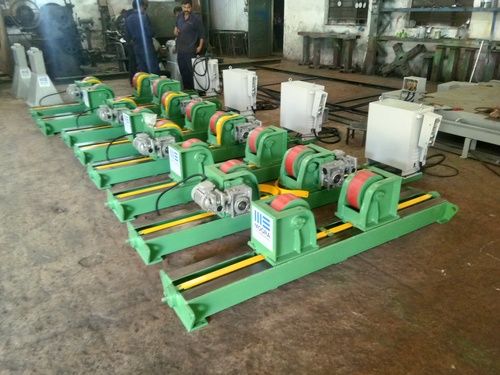
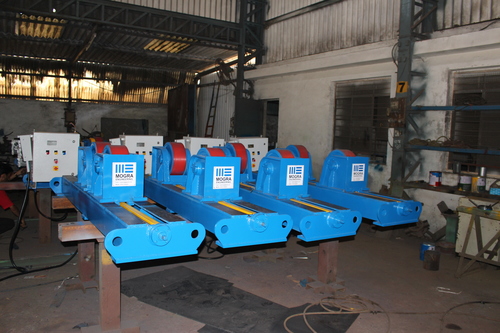
Lead Screw Type Welding Rotator
2,30,000 INR/Unit
Product Details:
- Diameter Range up to 4500 mm
- Automation Grade Semi-Automatic / Automatic
- Output Voltage Variable (Controllable Speed)
- Equipment Type Welding Rotator
- Power Source Electric
- Frequency 50 Hz
- Welding Positioning/Rotating for Automated Welding
- Click to View more
X
Lead Screw Type Welding Rotator Price And Quantity
- 2,30,000 INR/Unit
- 1 Unit
Lead Screw Type Welding Rotator Product Specifications
- New
- AC Motor
- Electric
- Low Power Consumption
- 4 kW
- 50 Hz
- Customizable as per requirement
- Mild Steel
- Positioning/Rotating for Automated Welding
- 10 A
- 380 V
- Range up to 4500 mm
- Three Phase
- Pipe, Vessel, and Tank Welding Rotation
- 380 V
- Semi-Automatic / Automatic
- Variable (Controllable Speed)
- Lead Screw Type Welding Rotator
- 5 Tons / 10 Tons / 20 Tons (Model Dependent)
- Welding Rotator
- 10-200 A (Machine-operated)
- Remote Pendant Control / Digital Control Panel
- Industrial/Heavy Duty Applications
- Powder Coated or Painted
- Low Operating Noise
- Up to 20000 kg (as per model)
- Can be paired with idler rotators for heavy/long vessels
- 100-1000 mm/min (Variable)
- Overload Protection, Emergency Stop
- Manual/Lead Screw Adjustment
- Polyurethane or Steel Options
Lead Screw Type Welding Rotator Trade Information
- 12 Unit Per Month
- 4-5 Week
Other Products in 'Welding Rotators' category
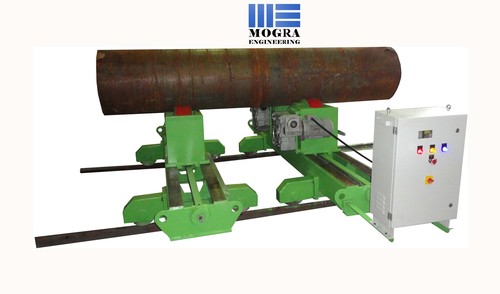
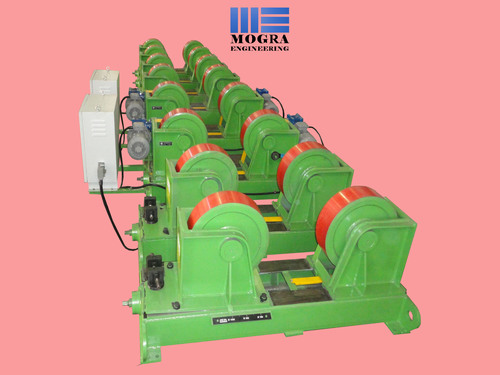

Get in touch with us
MOGRA ENGINEERING PVT. LTD.
GST : 27AACCM8528L1Z0
GST : 27AACCM8528L1Z0

- 30/2, F-II Block, M.I.D.C,Pimpri - 411018, Maharashtra, India
- Phone :View Number

- Mr Sudhir Kumar Mitra (Managing Director)
- Mobile :View Number
- Send Inquiry
 Send Inquiry
 Send Inquiry
|


MOGRA ENGINEERING PVT. LTD.
All Rights Reserved.(Terms of Use)
Developed and Managed by Infocom Network Private Limited.
Developed and Managed by Infocom Network Private Limited.